
THE PHOTOSWITCH STORY
A few years ago I was doing what most of us do - scrolling through guitar gear I didn’t need. I was looking at the GigRig G2. Not because I needed one, but because it’s a beautiful and brilliant piece of gear. One detail in particular caught my attention: optical switching.
I went looking for answers, but there wasn’t much out there. So instead of finding out how it worked, I started wondering how I could make one myself.
That’s really where this whole thing started - not out of necessity, but out of curiosity.
I wanted to build a footswitch that felt as clean as it looked.
That quickly turned into a short list of requirements:
No visible threads or nuts on the outside
No height-setting nuts; Find a good height and set it to be constant
Easy to press, even with your pinky when you're half asleep
Comfortable for barefoot or sock stomping
Durable - as close to indestructible as possible
From there, the idea itself was simple on paper: create a beam of light, detect it, and find a reliable way to interrupt it.
None of those concepts are new. But turning them into something that actually works inside a guitar pedal… that’s where things got a bit more complicated.
Where do you even start? What components do you use? What values make sense? How do you make it reliable?
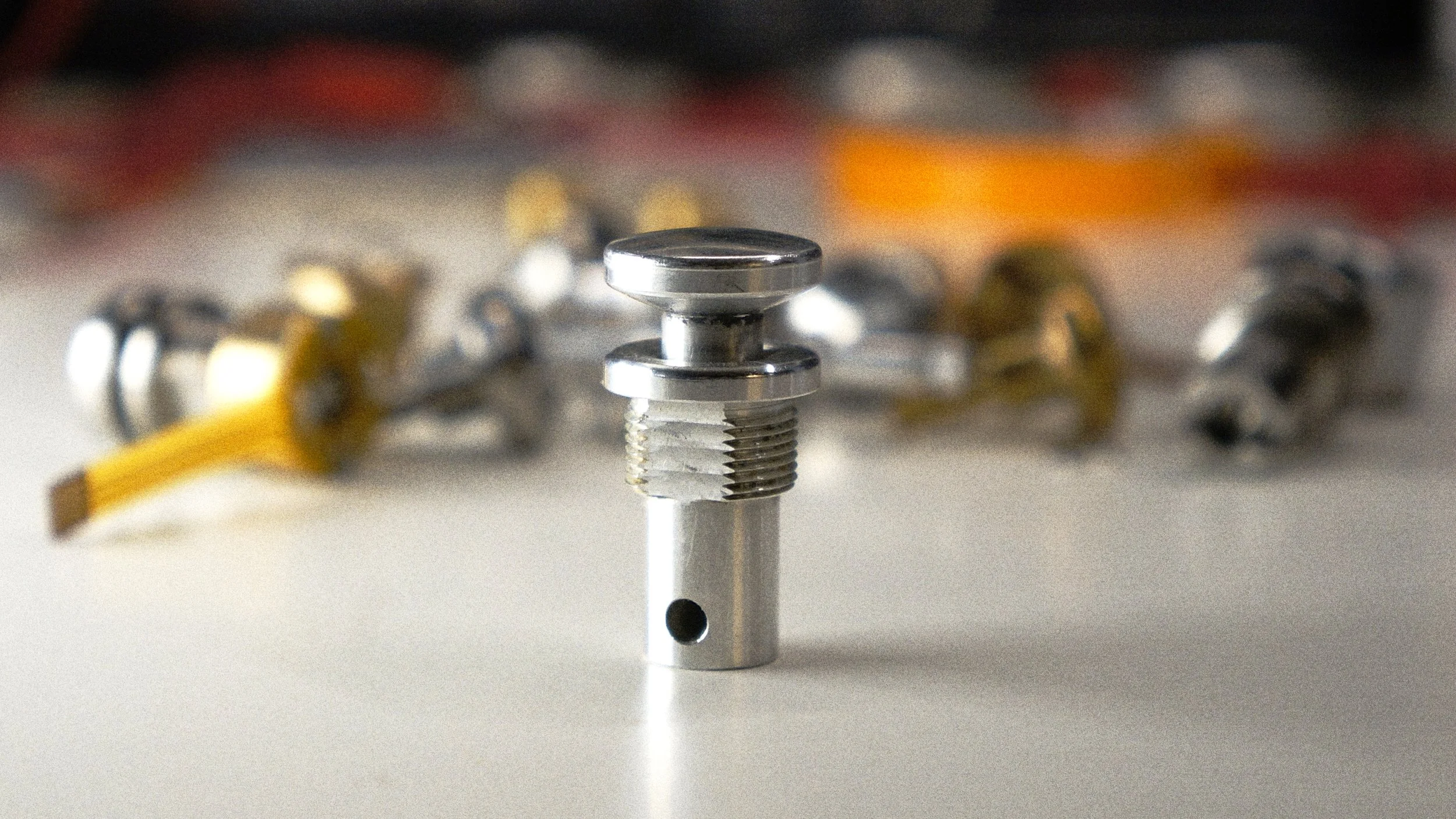
The very first prototype
The first proof of concept came together surprisingly quickly. The second iteration was already doing its job well. At that point, I thought I had it figured out. I had already considered things like false triggering and alignment, and in my mind, those were the hard problems. Solve those, and you’re done… right? Right?
Not quite.
What I didn’t account for were all the problems I didn’t even know existed yet. And one by one, they started showing up. A small change here, an out-of-stock component there with a “nearly identical” replacement - and suddenly things start to snowball.
Small things at first. Inconsistent behavior. Edge cases that only appeared occasionally. Situations where everything worked perfectly… until it didn’t. Sometimes it would trigger ten times in a row, and then miss once for no obvious reason.
That’s when it became clear: I hadn’t solved the problem - I had only solved the part I understood. But now I knew where the actual problems were hiding. And that’s when the real work started.
Some fixes were simple. Small adjustments to the mechanics to improve alignment, refining the circuitry to eliminate false triggering and oscillation - the kind of changes that seem obvious in hindsight. Others weren’t. A few issues forced a complete rethink of parts of the design. Going back, reworking, sometimes starting over entirely just to solve one stubborn problem.
But that’s the nature of it. Each iteration got me a little closer.
Closer to something that feels solid. Reliable. As close to indestructible as I can realistically make it.
Nothing is ever truly indestructible - but that just means there’s always room to improve.
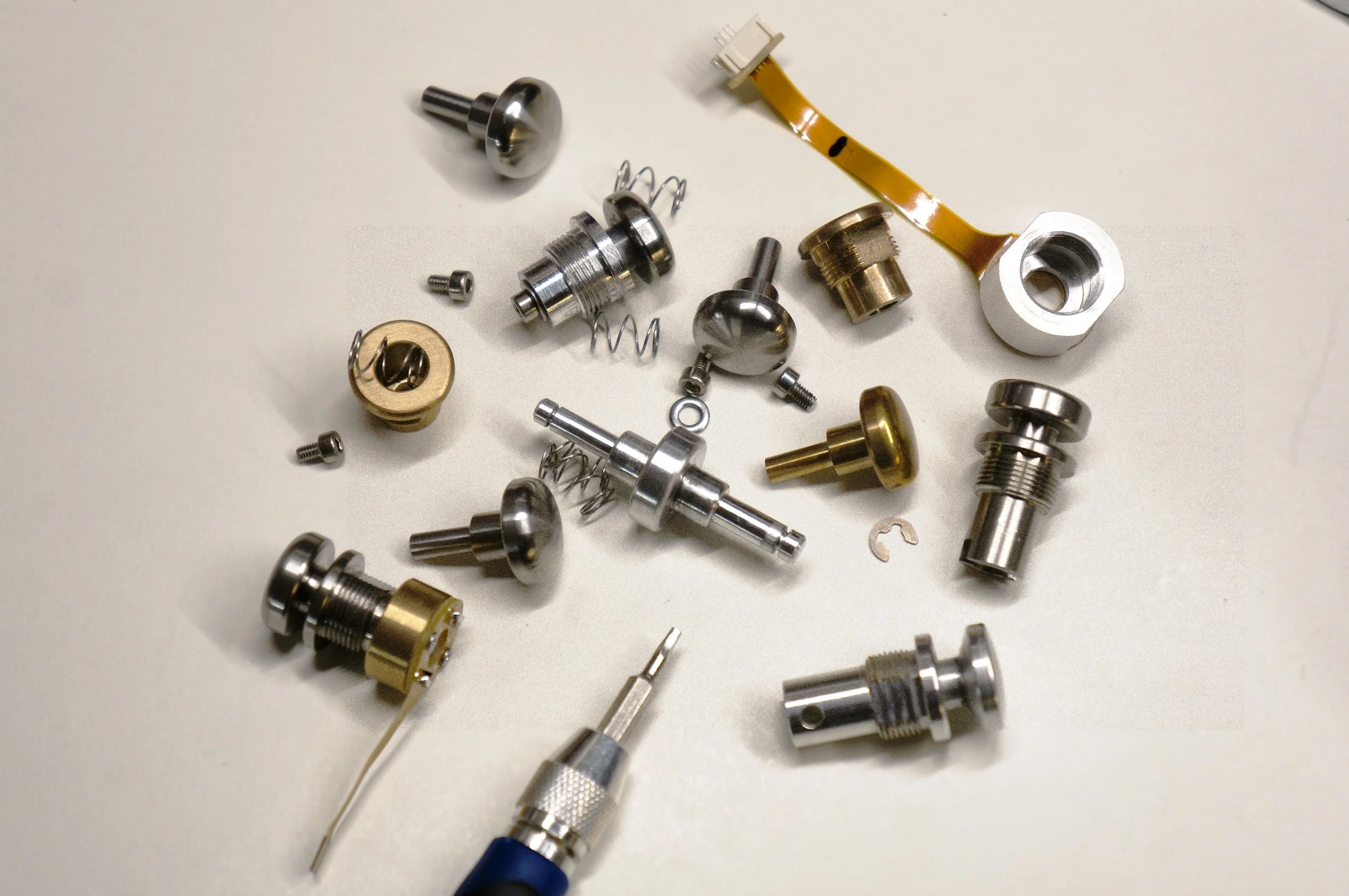
Test parts galore
In the end, all of this work goes into something most people won’t even think about.
A footswitch should just work. Every time, without hesitation, without getting in the way. Something you can trust without having to question it — whether you're playing in your bedroom or on a stage.
That’s the goal.
And while the design will probably keep evolving, the idea behind it hasn’t really changed since the beginning: take something simple, and make it look good, feel right, and work exactly as it should.
* Somewhere along the way, this turned into a much longer set of notes - basically the full thought process, mistakes and all.
If you feel like going down that rabbit hole, you can find the extended story here.